5G Coverage in Australia
5G network coverage across Australia continues to expand, with major telecommunications providers investing significantly in infrastructure development. This page provides an overview of current 5G coverage by state and territory, along with important considerations for users.
Coverage Overview
5G coverage in Australia follows a predictable pattern of deployment, typically beginning in metropolitan areas before expanding to regional and rural locations. The rollout strategy prioritizes population density and economic activity, resulting in coverage levels that vary significantly by geographic location.
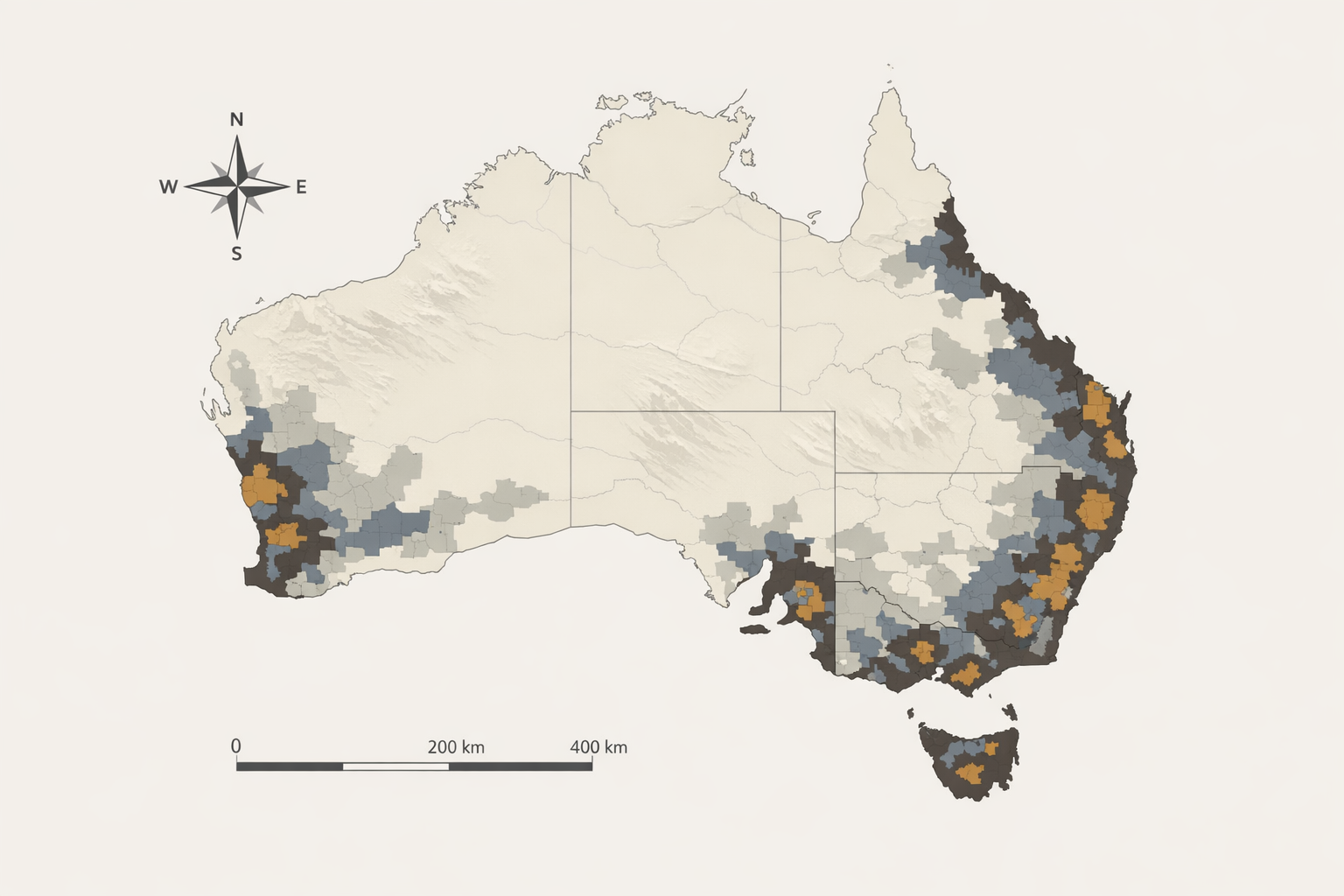
Metropolitan Areas
Coverage Level: High
Major cities and urban centers have extensive 5G coverage, with most suburbs and central business districts serviced. Coverage continues to improve as additional infrastructure is deployed.
Regional Cities
Coverage Level: Moderate to High
Regional cities and large towns are progressively receiving 5G coverage. Deployment in these areas is ongoing, with some locations fully covered and others in various stages of implementation.
Rural Areas
Coverage Level: Limited to Moderate
Rural coverage varies significantly. Some rural communities have 5G access, while others rely on 4G or earlier technologies. Geographic challenges affect deployment timelines.
State-by-State Coverage
New South Wales (NSW)
Major Coverage Areas: Sydney metropolitan area, Newcastle, Wollongong, Central Coast, Illawarra region, Blue Mountains, and numerous regional centers.
Current Status: Extensive coverage in Greater Sydney and surrounding regions. Regional areas including Wagga Wagga, Albury, Coffs Harbour, and Port Macquarie have active 5G services. Coverage expansion continues in western NSW and northern regions.
Notes: Sydney has some of the most comprehensive 5G coverage in Australia, with ongoing expansion into outer metropolitan areas.
Victoria (VIC)
Major Coverage Areas: Melbourne metropolitan area, Geelong, Ballarat, Bendigo, Shepparton, and regional centers throughout the state.
Current Status: Strong coverage across metropolitan Melbourne and surrounding suburbs. Major regional cities including Ballarat, Bendigo, and Geelong have established 5G networks. Regional expansion is progressing steadily.
Notes: Melbourne's 5G coverage is among the most advanced in Australia, with extensive infrastructure in the CBD and inner suburbs.
Queensland (QLD)
Major Coverage Areas: Brisbane metropolitan area, Gold Coast, Sunshine Coast, Cairns, Townsville, Toowoomba, and regional centers.
Current Status: Comprehensive coverage in South East Queensland (Brisbane, Gold Coast, Sunshine Coast). Major regional cities have active 5G services. Coverage expansion continues in regional Queensland and the Far North.
Notes: The tourism corridor from Brisbane to the Gold Coast has particularly good 5G coverage due to high population density and tourist demand.
Western Australia (WA)
Major Coverage Areas: Perth metropolitan area, Mandurah, Bunbury, Geraldton, Kalgoorlie, and regional centers.
Current Status: Extensive coverage in Perth and surrounding areas. Major regional centers including Bunbury, Geraldton, and Kalgoorlie have 5G services. Coverage expansion is ongoing but faces geographic challenges in remote areas.
Notes: Perth has well-developed 5G infrastructure, while coverage in Western Australia's vast remote regions remains limited due to geographic and population factors.
South Australia (SA)
Major Coverage Areas: Adelaide metropolitan area, Mount Gambier, Whyalla, Murray Bridge, and regional centers.
Current Status: Comprehensive coverage across metropolitan Adelaide. Major regional centers including Mount Gambier and Whyalla have 5G services. Expansion continues to additional regional locations.
Notes: Adelaide has excellent 5G coverage in the CBD and metropolitan suburbs, with ongoing expansion into outer suburbs.
Tasmania (TAS)
Major Coverage Areas: Hobart metropolitan area, Launceston, Devonport, Burnie, and regional centers.
Current Status: Coverage established in Hobart and Launceston. Major regional centers have limited 5G services. Deployment continues across the state.
Notes: Coverage in Tasmania is more limited than mainland states, reflecting smaller population centers and challenging geography.
Australian Capital Territory (ACT)
Major Coverage Areas: Canberra metropolitan area.
Current Status: Strong coverage across Canberra's metropolitan area, including the CBD and major suburbs. Coverage is comprehensive due to the city's urban density.
Notes: Canberra has excellent 5G coverage, particularly in the CBD, Parliamentary Triangle, and major residential areas.
Northern Territory (NT)
Major Coverage Areas: Darwin metropolitan area, Palmerston, Alice Springs, Katherine.
Current Status: Coverage established in Darwin and Palmerston. Alice Springs has 5G services. Coverage in remote NT communities remains limited.
Notes: The Northern Territory faces significant geographic challenges for 5G deployment due to vast distances and sparse population distribution.
Factors Affecting Coverage
Several factors influence 5G coverage availability and quality at any given location:
Infrastructure Deployment
- Cell Tower Locations: 5G requires upgraded or new cell towers. Areas with existing tower infrastructure can be upgraded more quickly.
- Backhaul Capacity: High-capacity fiber connections to towers are necessary for 5G performance. Areas without fiber infrastructure may have delayed deployment.
- Network Architecture: The density of cell sites affects coverage quality, particularly for high-frequency bands.
Geographic Considerations
- Topography: Hills, mountains, and valleys can affect signal propagation and coverage patterns.
- Distance from Towers: Signal strength decreases with distance from cell sites, particularly for high-frequency bands.
- Urban Density: Dense urban environments may have many cell sites, creating comprehensive coverage, while rural areas have fewer towers.
Building and Environmental Factors
- Building Materials: Concrete, metal, and other materials can attenuate 5G signals, affecting indoor coverage.
- Vegetation: Dense foliage can interfere with signal transmission, particularly for higher frequencies.
- Weather Conditions: Rain and atmospheric conditions can affect signal quality, especially for high-frequency bands.
Checking 5G Coverage
Users should verify 5G coverage for their specific location before making decisions about service plans or device purchases. Coverage can vary significantly between service providers and may differ from general area assessments.
Steps to Check Coverage
- Identify Your Location: Determine the specific address or area where you need 5G service.
- Check Provider Coverage Maps: Each telecommunications provider maintains coverage maps showing 5G availability.
- Consider Multiple Providers: Coverage can vary between providers. Compare coverage from all major carriers.
- Verify Indoor Coverage: Indoor coverage may differ from outdoor coverage. Consider using WiFi calling where available.
- Test Signal Strength: If possible, test 5G reception at your location using a compatible device.
Important Notes
Availability by Location Type
| Location Type | Coverage Probability | Typical Speed Range | Notes |
|---|---|---|---|
| Capital City CBD | Very High | 100 Mbps - 1+ Gbps | Dense infrastructure, multiple providers |
| City Suburbs | High | 50 Mbps - 500 Mbps | Varying by suburb density |
| Regional Cities (>50,000) | Moderate to High | 50 Mbps - 300 Mbps | Deployment ongoing in many areas |
| Regional Towns (10,000-50,000) | Moderate | 30 Mbps - 200 Mbps | Varies significantly by location |
| Small Towns (<10,000) | Low to Moderate | N/A to 100 Mbps | Many areas still awaiting 5G |
| Rural Communities | Low | N/A | Primarily 4G or earlier technologies |
| Remote Areas | Very Low | N/A | Limited mobile coverage generally |
Future Expansion Plans
5G network expansion in Australia continues actively. Telecommunications providers regularly announce new coverage areas and infrastructure investments. Future developments include:
- Ongoing Regional Expansion: Continued deployment in regional cities and towns across all states and territories.
- Infrastructure Upgrades: Ongoing upgrades to existing infrastructure to improve capacity and performance.
- New Frequency Bands: Potential deployment of additional frequency bands as spectrum becomes available.
- Technology Enhancements: Ongoing improvements in network technology, including software updates and new equipment deployments.
- Government Initiatives: Support for improving regional telecommunications infrastructure through various government programs.
Users should check with service providers regularly for the most current coverage information, as coverage areas are continually expanding and improving.