5G Technology & Usage
Understanding 5G technology helps users appreciate its capabilities and potential applications. This page provides accessible explanations of 5G technology, how it differs from previous generations, and the practical ways it can be used in everyday life and business.
How 5G Technology Works
5G networks use a combination of new technologies and approaches to achieve significant improvements over previous mobile network generations. While the underlying principles remain similar to earlier networks, 5G introduces several key innovations.
Network Architecture
5G networks are designed to be more flexible and efficient than previous generations. The architecture supports different types of traffic with different requirements, enabling the network to prioritize critical communications while handling high-volume data transfer.
Key Features:
- Software-Defined Networking (SDN): Networks can be configured and managed through software, allowing faster deployment of new services
- Network Slicing: Multiple virtual networks can be created on the same physical infrastructure, each optimized for different use cases
- Edge Computing: Processing can be performed closer to users, reducing latency and improving response times
Radio Technology
5G uses advanced radio technology to transmit data more efficiently. Improvements include higher frequency bands, more efficient encoding, and better use of available spectrum.
Key Features:
- Massive MIMO: Multiple antennas at both transmitter and receiver improve capacity and signal quality
- Beamforming: Signals are directed specifically toward users rather than broadcast widely, improving efficiency
- Higher Frequencies: Use of millimeter wave frequencies provides greater capacity in high-traffic areas
- Improved Modulation: More data can be transmitted in each signal transmission
Technical Comparison: 4G vs 5G
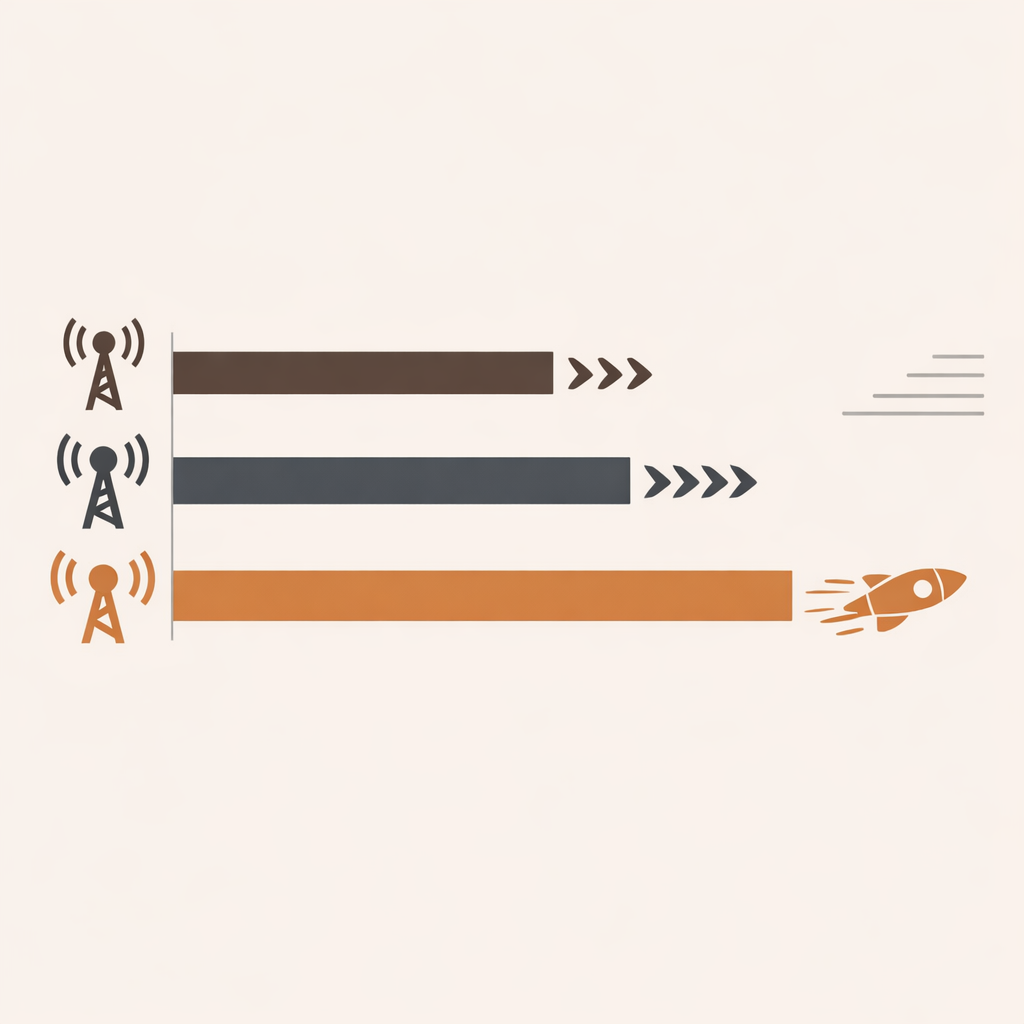
| Characteristic | 4G/LTE | 5G | Practical Implications |
|---|---|---|---|
| Peak Speed | Up to 1 Gbps | Up to 20 Gbps | Much faster downloads and file transfers |
| Typical Speed | 20-100 Mbps | 50-500+ Mbps | Faster everyday internet use |
| Latency | 30-50 ms | 1-10 ms | Better real-time applications like gaming |
| Connection Density | ~100,000 devices/km² | ~1,000,000 devices/km² | More devices can connect simultaneously |
| Energy Efficiency | Baseline | Up to 90% more efficient | Longer battery life for IoT devices |
| Spectrum Efficiency | Baseline | 3-5x more efficient | Better use of available frequencies |
Note: Actual performance depends on many factors including location, network congestion, device capabilities, and specific network implementation.
Practical Use Cases
Personal Use
Streaming Entertainment
- High-definition and 4K video streaming with minimal buffering
- Faster download of movies, music, and other content
- Smoother video calls and video conferencing
- Enhanced gaming experiences with lower latency
Mobile Productivity
- Faster cloud access and file synchronization
- Improved remote work capabilities
- Quick access to online services and applications
- Better performance when mobile hotspots are used
Smart Home Integration
- Connection of multiple smart devices simultaneously
- Reliable control of smart home systems from anywhere
- Enhanced security camera streaming
- Integration of smart appliances and utilities
Navigation and Travel
- Real-time traffic updates and route optimization
- Fast map loading and point-of-interest searches
- Augmented reality navigation assistance
- Access to location-based services
Business Applications
Healthcare
Remote patient monitoring, telemedicine consultations, medical imaging transmission, and potential for remote surgical procedures with ultra-low latency connections.
Manufacturing
Industrial automation, robotics control, real-time monitoring of equipment, predictive maintenance, and seamless communication between factory systems.
Retail
Augmented reality shopping experiences, inventory management systems, customer analytics, and enhanced point-of-sale capabilities.
Agriculture
Precision farming with IoT sensors, automated irrigation systems, livestock monitoring, and real-time weather data integration.
Transportation
Connected vehicles, traffic management systems, fleet monitoring, and infrastructure for autonomous vehicle communication.
Education
Virtual classrooms, interactive learning experiences, access to cloud-based educational resources, and remote examination capabilities.
Smart Cities
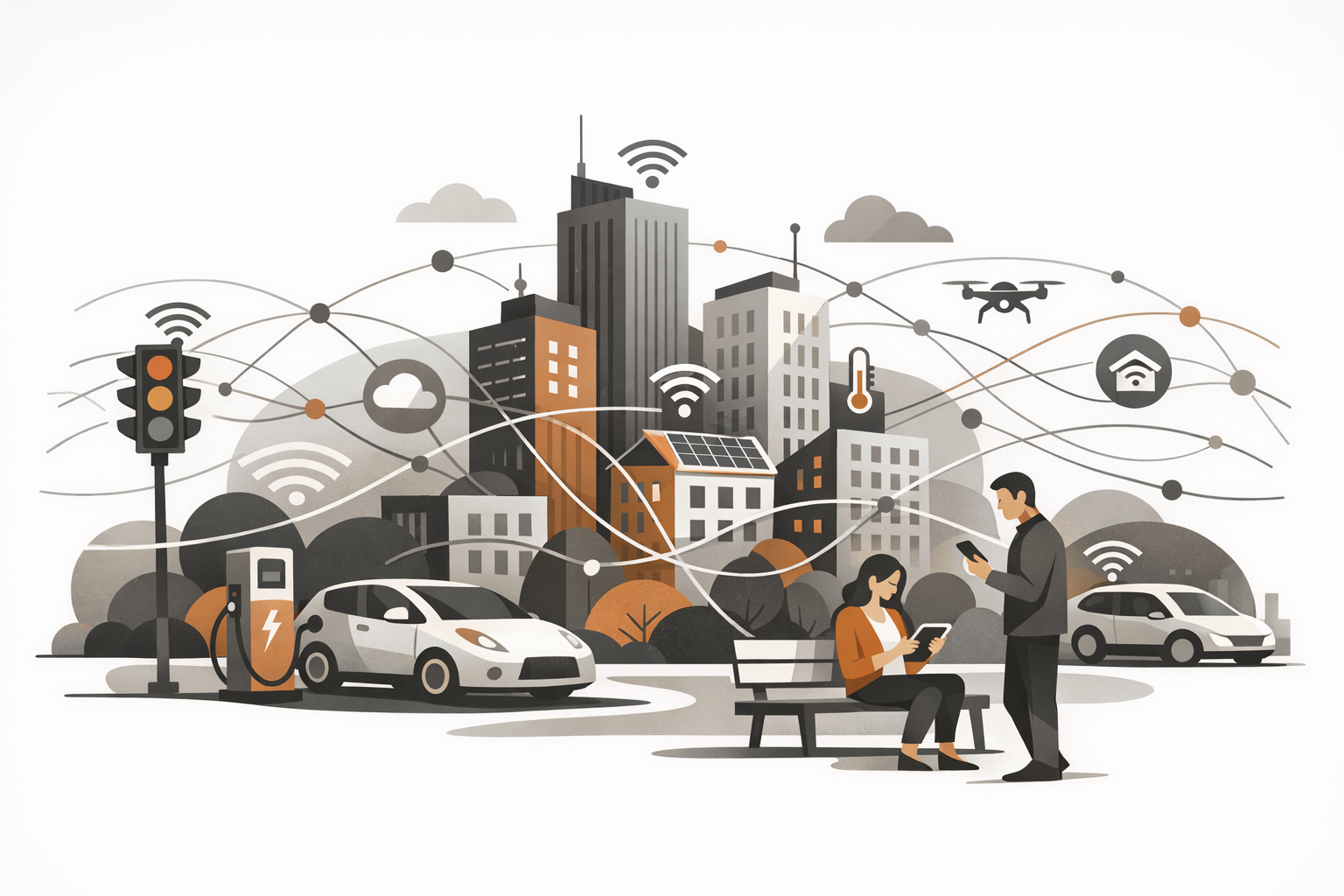
5G technology enables smart city applications that improve urban living through connected infrastructure:
- Traffic Management: Real-time traffic monitoring and adaptive traffic signal control
- Public Safety: Connected surveillance systems, emergency response coordination, and disaster management
- Environmental Monitoring: Air quality sensors, noise monitoring, and weather station networks
- Utilities: Smart grids, water management systems, and waste collection optimization
- Public Services: Smart street lighting, connected public transportation, and digital city information systems
Internet of Things (IoT) Connectivity
5G significantly improves the connectivity capabilities for Internet of Things devices, enabling massive networks of connected sensors and devices. This has implications across numerous industries and applications.
IoT Use Cases
Smart Agriculture
- Soil moisture sensors for precision irrigation
- Weather monitoring stations
- Livestock tracking and health monitoring
- Automated harvesting equipment
- Crop disease detection systems
Smart Buildings
- Climate control and energy management
- Security and access control systems
- Occupancy sensors for space optimization
- Predictive maintenance for building systems
- Emergency response integration
Industrial IoT
- Equipment monitoring and diagnostics
- Safety systems and emergency shutdowns
- Supply chain tracking
- Quality control systems
- Inventory management
Consumer IoT
- Smart home devices and appliances
- Wearable health and fitness devices
- Connected vehicles
- Personal security systems
- Entertainment and media devices
Getting Started with 5G
Requirements
To access 5G networks, users need:
- 5G-Capable Device: A smartphone, tablet, mobile hotspot, or other device that supports 5G technology
- 5G Service Plan: A service plan from a telecommunications provider that includes 5G access
- 5G Coverage: 5G network coverage must be available in your location
- Suitable SIM Card: Some providers may require a specific SIM card for 5G services
Device Considerations
When selecting a 5G-capable device, consider:
- Frequency Band Support: Different devices support different 5G frequency bands. Ensure the device supports bands used in Australia
- Antenna Design: Quality of antennas affects 5G reception and performance
- Battery Life: 5G can be more power-intensive; look for devices with good battery optimization
- Processor Performance: Faster processors can better utilize 5G speeds for applications
- Future-Proofing: Consider devices that support emerging 5G features and enhancements
Service Plan Considerations
When choosing a 5G service plan:
- Data Allowance: Higher speeds may lead to higher data usage. Consider plans with adequate data allowances
- Coverage Area: Verify the provider's 5G coverage in your typical usage areas
- Network Performance: Consider provider network quality and user reviews in your area
- Plan Features: Some plans include additional features like international roaming or entertainment subscriptions
- Contract Terms: Review contract length, early termination fees, and upgrade options
Future 5G Developments
5G technology continues to evolve, with ongoing developments and improvements expected in the coming years. Future enhancements may include:
- Standards Evolution: Ongoing updates to 5G standards (3GPP releases) will bring new capabilities and improvements
- Enhanced Coverage: Continued expansion of coverage areas, particularly in regional locations
- Performance Improvements: Higher speeds and lower latency as technology matures
- New Applications: Emerging use cases as technology capabilities expand
- Integration with Other Technologies: Closer integration with edge computing, AI, and cloud services
- 6G Development: Research into 6G technology is already underway, potentially arriving in the late 2020s or early 2030s
Users should stay informed about developments in 5G technology as the ecosystem continues to evolve and mature.